Hey there, fellow metalworkers, heat treaters, and anyone who’s ever stared at a nitriding furnace spec sheet and thought, “Wait, what does any of this actually mean?” I’m [your name here] with [your company name here], and let’s be real—picking the right nitriding furnace isn’t just about grabbing the first shiny unit that fits your budget. It’s about something that’ll work for your parts, your team, and your bottom line for years. I’ve been selling nitriding furnaces for over a decade, and I’ve seen way too many folks pick a furnace that’s too big, too small, or just wrong for their needs. Today, I’m breaking this down like I’d explain it to my next-door neighbor who fixes tractors—no jargon, no fluff, just what actually matters. Nitriding Furnace
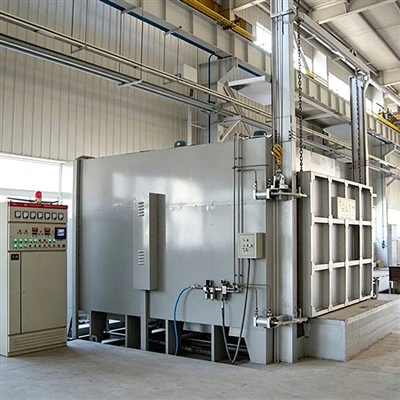
First off, let’s start with the basics: what are you even nitriding? Because if you’re nitriding tiny 2mm aerospace bolts vs. 1-meter long industrial gear shafts, your furnace needs are night and day. I once had a guy come to me last year saying he needed a “basic nitriding furnace” for his shop that only does small engine parts. He tried to cut corners and get a big batch furnace meant for 500kg parts, and guess what? He was wasting 30% of his gas every run because he was heating up way more space than he needed, and his small parts were getting jostled around and scratching. That’s a $1,200/month waste right there, easy. So first question: What’s your typical part size and load weight? Let’s keep this simple—measure your biggest part, how many you run at once, and how much total load (in kg or lbs) you need per cycle. If you run mostly small batches, a batch furnace might make sense, but if you’re doing continuous runs (like 24/7 for auto parts), a continuous pusher or mesh belt furnace is your jam. I can’t stress this enough: size isn’t just about the chamber—think about loading/unloading too. If your shop has a 2-ton overhead crane, don’t get a furnace that needs a 5-ton one. If you’re in a tight space, a vertical furnace is a lifesaver. I’ve installed vertical furnaces in shops that were originally built for just a bench furnace—they fit into unused floor space, man, game changer.
Next up, the nitriding method. This is where a lot of folks get lost, and honestly, I get it—there are so many types now: gas nitriding, plasma nitriding, ion nitriding, even salt bath (though salt bath’s fallen out of favor a lot lately for environmental stuff). Let’s keep it real. If you’re nitriding high-tensile steel for gears or shafts, traditional gas nitriding is still solid, but wait—are you dealing with parts that can’t have any white layer? Plasma nitriding gives you a super uniform case, no messy white layer, and it uses way less gas (like 40% less!) than gas. I had a medical device customer last month—they nitrided titanium implants, right? Their old gas furnace was leaving inconsistent cases, and they were reworking 15% of parts because of that. Switched to a small plasma unit, and their rework rate dropped to 2%. Now, if you’re running high-volume, low-cost parts (like auto transmission components), gas nitriding is still cheaper per cycle, even if it uses more gas. But here’s the thing: don’t mix and match. If you buy a gas furnace because it’s cheaper, but half your jobs need plasma, you’re gonna end up with two furnaces in a year anyway. Ask your furnace guy (that’s me, fyi) to break down cost per part, not just upfront cost. The upfront plasma furnace is more, but if it cuts your rework and energy costs, you’ll make that money back in 18 months, easy. Also, check if the furnace can do compound nitriding if you ever need it—some units are retrofittable, others aren’t. That’s a big one if you think you might expand your capabilities down the line.
Then there’s the heating and control system. Man, this is the heart of the furnace. I’ve seen cheap furnaces from no-name brands that heat unevenly—you’ll have parts in the front that are 50°C hotter than parts in the back, so your nitriding case depth is all over the place. That’s a nightmare for quality control. What you want is a furnace with either radiant tube heating or direct heating—direct is faster, more uniform, but radiant is better if you’re dealing with more volatile parts that could contaminate the heating elements. Now the controls: skip the old analog dials. Get a PLC-based system with data logging. Why? Because customers these days—especially in aerospace or medical—need traceability. They have to log every single cycle: temperature, gas flow, nitriding time, atmosphere composition. If a part fails, they need to pull that log and figure out what went wrong. I had an aerospace client a few years back who got audited by the FAA, and his old furnace with no data logs almost got his whole contract pulled. Switched to our PLC system, and he passed the audit no problem. Also, look for controls that let you adjust nitriding potential dynamically. Early on, when I started, we had furnaces where you set the gas flow once, and that was it. Now you can crank up the potential for the first phase to build the case fast, then dial it down for the diffusion phase, which saves time and gas. Oh, and don’t forget safety controls! Nitriding uses ammonia, right? Ammonia breaks down into hydrogen, which is flammable, and toxic if it leaks. So make sure your furnace has ammonia leak detectors, hydrogen sensors, automatic gas shut-offs, and pressure relief valves. I can’t tell you how many small shops I’ve been to where the safety systems were afterthoughts, and that’s just an accident waiting to happen.
Energy efficiency. This is huge now, with energy costs going up every year. I had a customer last year who was paying $8,000 a month in gas for his old nitriding furnace. Switched to our energy-efficient gas unit, and his bill dropped to $5,200. That’s $33,600 a year back in his pocket! What makes a furnace energy efficient? Insulation, first. High-density ceramic fiber insulation isn’t just cheaper to install—it retains heat way better, so you’re not losing 30% of your heat through the walls. Then, proper sealing. If your furnace door doesn’t seal tight, cool air gets in and hot air gets out, which makes your heating system work harder. Also, load compensation—some furnaces adjust heating based on how much load you have, so you don’t waste energy heating an empty chamber. Another thing: ammonia cracking efficiency. A lot of cheap furnaces only crack 50-60% of the ammonia they feed, so you’re wasting a ton of unused ammonia that goes out the exhaust. Our units crack over 90% of ammonia, so you get more usable nitrogen, less waste, lower costs. Don’t take a sales rep’s word for this—ask for the specific energy consumption numbers in kWh per kg of load, or m³ of ammonia per cycle. Do the math before you buy, not after.
Size, method, controls, energy—wait, what about support and service? Oh man, this is the part that most people overlook until their furnace breaks down at 2 a.m. when they have a big order due. I’ve had customers buy cheap furnaces from overseas that took 6 weeks to get a replacement element, and their order got canceled, costing them $20,000. Our shop keeps common parts in stock at our warehouse, and we have service techs on call 24/7 for customers in North America (or wherever you’re located, adjust as needed). Also, training—your team can’t run the furnace if they don’t know how to use it. We do free on-site training for the first week after installation, and we have online tutorials for when they need a refresher. Another thing: warranties. A good furnace should have at least a 1-year full warranty on parts and labor, and longer warranties on heating elements and controls. I stand behind every furnace I sell, because I’ve built relationships with these customers for years. If a rep tries to sell you a furnace with a 30-day warranty, run. That’s a sign they don’t stand behind their product.
Wait, let’s talk about some common mistakes I see all the time, just to make sure you don’t fall for them. First, buying too big. I mentioned this earlier, but it’s worth repeating. A lot of folks think “bigger is better,” but no—overloading a furnace (even if it’s rated for more) causes uneven heating, longer cycle times, and shorter furnace life. If your average load is 200kg, get a furnace that’s rated for 300kg max, not 500kg. That way you have room for extra parts if you need it, but you’re not running it at 100% capacity every time. Second, ignoring exhaust treatment. Nitriding furnaces put out ammonia and other gases, and a lot of regions have environmental regulations on emissions. If you don’t have an exhaust scrubber or treatment system, you could get hit with fines. Our furnaces come with optional low-emission exhaust systems that meet all local standards, so you don’t have to worry about that. Third, not planning for future growth. If you’re a small shop now, but you’re planning to take on more jobs in 2 years, buy a furnace that’s retrofittable—maybe add a plasma unit later, or expand the load size. It’s cheaper than buying a whole new furnace when you outgrow your current one.
Let me wrap this up with a quick example of how this all comes together. Last year, I worked with a small auto parts shop in Ohio. They were nitriding transmission gears, 50-100kg per batch, 5 batches a day, traditional gas nitriding. Their old furnace was 5 years old, 300kg rated, analog controls, high energy use. We sat down, looked at their numbers: their rework rate was 10%, energy costs were $4,200/month, and they were planning to add a new line for small engine parts in 2 years. We recommended a 200kg batch gas furnace (perfect for their average load, a little headroom), with PLC controls, ammonia cracking efficiency of 92%, and a 2-year warranty. The total cost was 15% less than a bigger furnace they were looking at. Now, their rework rate is down to 4%, their energy bill is $2,800/month, and when they add the new parts in 2 years, we can retrofitt it to handle small plasma batches if they want. That’s the right choice.
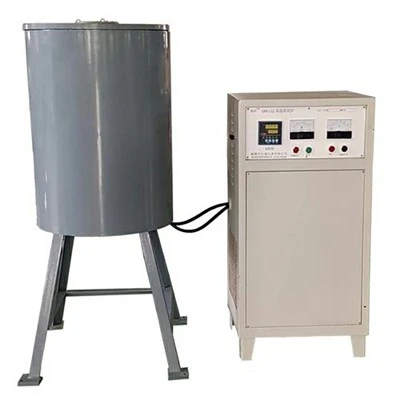
At the end of the day, choosing the right nitriding furnace isn’t about the flashiest specs or the lowest price. It’s about matching the furnace to your specific parts, your shop layout, your budget, and your long-term goals. I’ve spent 12 years learning this stuff, and I’m not here to sell you a furnace that doesn’t fit your needs. If you’re in the market, or you’re just curious about what would work best for your operations, hit me up. No pressure, no sales pitch—just honest advice that’s helped hundreds of shops like yours get the right furnace without wasting money. I know picking this kind of equipment is a big deal, and I’m here to walk you through every step. Reach out to my team and me to chat through your needs, and we’ll put together a custom proposal that fits.
Tempering Furnace References:
- ASM International. (2019). Nitriding and Nitrocarburizing: Processes, Equipment, and Applications. Materials Park, OH: ASM International.
- Groover, M. P. (2020). Fundamentals of Modern Manufacturing: Materials, Processes, and Systems (7th ed.). Hoboken, NJ: John Wiley & Sons.
- Davis, J. R. (Ed.). (2002). Surface Engineering for Corrosion and Wear Resistance. Materials Park, OH: ASM International.
- American Society of Heating, Refrigerating and Air-Conditioning Engineers (ASHRAE). (2021). Process Heating and Cooling Handbook. Atlanta, GA: ASHRAE.
Jiangsu Fangwei Furnace Industry Co., Ltd.
Jiangsu Fangwei Furnace Industry Co., Ltd. is one of the most professional nitriding furnace manufacturers and suppliers in China. With abundant experience, we are committed to providing high quality customized products with competitive price. Please feel free to buy advanced nitriding furnace made in China here from our factory.
Address: No.168, HuangNian Bridge, DaoShu Town, Danyang City, JiangSu Province, China
E-mail: fangwei@fwfurnaces.com
WebSite: https://www.fwfurnaces.com/
