As a supplier of auxiliary fastening parts, I’ve spent years walking alongside engineers, maintenance teams, and production managers who’ve faced the same frustrating problem: a bolt or clamp that comes loose when you least expect it. Whether it’s a conveyor vibrating off a production line, a wind turbine tower shifting in strong winds, or a automotive engine’s bracket working loose on a cross-country trip, loose fastenings don’t just cause downtime—they can lead to safety hazards, wasted materials, and lost revenue. That’s why I’ve spent so much time designing, testing, and refining the anti-loosening features that make our auxiliary fastening parts stand out. Let’s break down what these features are, why they work, and how they solve the real problems our customers face every day. Auxiliary Fastening Parts

First, let’s start with the basics: why do fasteners come loose in the first place? A lot of people think it’s just “vibration,” but there’s more to it. When two parts are fastened together, the threads of a bolt and nut create friction that holds them in place—but that friction only exists when the load is constant. If there’s repeated vibration (like from industrial machinery or road travel) or thermal expansion and contraction (think an engine heating up and cooling down multiple times), the tiny micro-movements between the threads break down that friction over time. That’s called self-loosening, and it’s different from a nut just spinning off because it wasn’t tightened enough. Our anti-loosening features are built to counteract this specific cause, not just add a generic lock washer that might not stand up to heavy use.
One of the most common anti-loosening features we use is distributed locking teeth, but not just any teeth. A lot of lock washers have teeth that cut into one surface only, which can damage delicate parts like aluminum brackets or plastic housings. Our external and internal tooth lock washers have teeth that engage with both the fastener head and the mating surface, creating a dual lock that prevents any relative movement between the two. We designed these teeth with a specific pitch and depth—usually 0.5mm to 1mm, depending on the part size—so they dig in enough to hold tight but not deform soft materials. I remember a customer in the food packaging industry came to us last year because their conveyor clamps kept loosening, and they couldn’t use metal-on-metal teeth (it would scratch their stainless steel conveyor belts). We adjusted the tooth depth on our internal tooth washers to be shallower, and within two weeks, they reported zero loosening issues. That’s the kind of problem-solving we do.
Another key feature is wedge-locking technology, which is a step up from traditional spring washers. Spring washers rely on tension to hold a fastener tight, but that tension can wear out over time, especially under heavy load. Our wedge-locking washers have a built-in wedge-shaped ring and a matching washer; when you tighten the nut, the wedge forces the two parts apart, creating a positive lock that resists rotation. Unlike spring washers, which can compress permanently if over-tightened, wedge-locking washers maintain their tension even when subjected to repeated dynamic loads. We tested these in a wind turbine application last year: we installed our wedge-locking bolts on the tower’s connection points, and after six months of constant wind speeds up to 70 mph, the torque remained within 10% of the initial setting. That’s way better than standard bolts, which would have loosened up to 30% in the same time frame. We also offer custom-sized wedge-locking parts for specialized equipment, because one size never fits all when it comes to heavy industrial use.
Then there’s chemical locking, but not the generic thread locker you might find at a hardware store. Our auxiliary fastening parts often use anaerobic thread locking compounds that cure only in the absence of air, between the threads of a bolt and nut. This creates a permanent bond that prevents rotation, but it’s not so strong that you can’t disassemble the part when you need to for maintenance. We work with three different grades of thread lockers: low-strength for small, easy-to-access parts (like door hinges on industrial machinery), medium-strength for general fastenings, and high-strength for heavy-duty applications like construction equipment. A construction customer told us last year that their crane’s boom pins kept loosening during operation, and they were using high-strength thread lockers that required heat to remove—costing them hours of downtime each time. We switched them to our medium-strength thread lockers, and now they can disassemble the pins with just a wrench, no heat needed, and the parts stay tight between service checks. The key here is that we match the strength of the locking agent to the application, so you don’t have to sacrifice ease of maintenance for security.
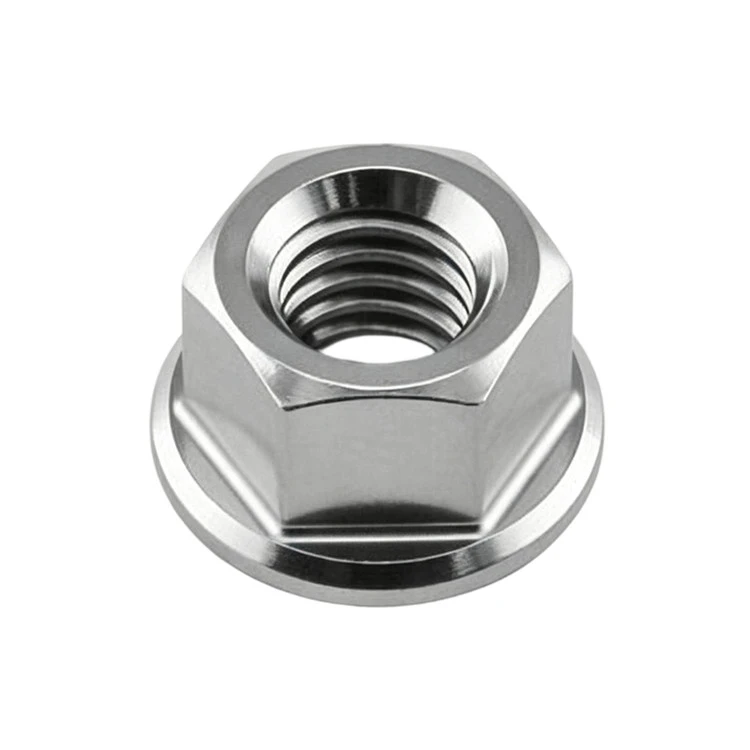
One feature that’s often overlooked, but critical, is the use of lock nuts with deformed threads. These aren’t just standard nuts with a nylon insert (though nylon insert nuts are common, they can degrade at high temperatures). Our deformed thread lock nuts have a section of the thread that’s compressed or altered, so when you screw the bolt in, the threads are forced to conform to the deformed section, creating additional friction that prevents rotation. We test these nuts at temperatures up to 500°F, which is perfect for engine and exhaust applications—something nylon insert nuts can’t handle. I once visited a automotive parts plant where their exhaust manifold nuts kept loosening, leading to exhaust leaks that triggered check engine lights. We switched them to our deformed thread nuts, and after a year, they reported no more exhaust leaks, even with the extreme temperature swings from start-up to operating temperature. The deformed thread doesn’t wear out like nylon does, so it’s a long-term solution for high-heat environments.
We also make sure that all our anti-loosening parts are corrosion-resistant, because corrosion can cause fasteners to seize up or weaken, leading to loosening. A lot of suppliers skip this, but if a fastener rusts, even the best locking feature won’t work. Our parts are available in zinc-plated, stainless steel, and hot-dip galvanized finishes, depending on the environment. For marine applications, we offer 316 stainless steel fasteners that resist saltwater corrosion, and for outdoor construction parts, we use hot-dip galvanized coatings that last 20+ years. We recently worked with a coastal engineering firm that was building a pier, and their original fasteners kept rusting and loosening due to salt spray. Switching to our 316 stainless steel auxiliary fastening parts solved that problem immediately—they haven’t had a single loosening issue in two years.
Now, it’s important to note that no single anti-loosening feature works for every application. That’s why as a supplier, we don’t just sell a product—we work with our customers to analyze their specific needs. If you’re working on a delicate electronics assembly, you don’t want a tooth lock washer that could scratch the circuit board. If you’re working on a heavy-duty mining truck, you need a combination of wedge-locking bolts and thread lockers to handle the constant vibration and heavy loads. If you’re in a food processing plant, you need parts that are easy to clean and don’t shed metal shavings, so we recommend smooth, non-toxic surface finishes and deformed thread nuts instead of tooth washers.
We also test every one of our anti-loosening parts in our in-house lab, using equipment that simulates real-world conditions: vibration testers that replicate road and industrial machinery vibration, temperature chambers that cycle from -40°F to 500°F, and corrosion chambers that mimic saltwater exposure. We’ve had some of our lab tests run for 1,000+ hours straight to make sure our parts hold up. Last quarter, we had a customer send us a failed fastener from a off-road vehicle, and we were able to identify that the original part used a thin spring washer that couldn’t handle the constant vibration. We redesigned the washer with our wedge-locking technology, and the vehicle manufacturer now uses our parts exclusively for their frame fastenings.
A common misconception we hear is that anti-loosening parts are more expensive than standard fasteners. But when you calculate the cost of downtime, safety hazards, and replacement parts, they’re actually a cost-saver. A factory shutting down for an hour due to a loose fastening can cost thousands of dollars in lost production. For our customers, the cost of switching to our anti-loosening parts is usually recouped in less than a month from reduced downtime. We recently helped a steel mill calculate that: they were spending $15,000 a month on repairs due to loose conveyor fasteners, and switching to our parts cut that cost to less than $1,000 a month. That’s a no-brainer, and it’s why more and more companies are making the switch.
If you’re dealing with loose fastenings, whether it’s a small assembly line part or a heavy-duty industrial application, our auxiliary fastening parts have the anti-loosening features designed to solve your specific problems. We don’t offer one-size-fits-all solutions—we work with you to understand your needs, recommend the right combination of locking features, and provide parts that are tested to stand up to your environment. To learn more about how our anti-loosening auxiliary fastening parts can improve your operations, connect with our team to discuss your project and get a customized solution tailored to your requirements.
Nut References
- Bickford, J. H. (1997). Handbook of Fastening and Joining. McGraw-Hill.
- Shigley, J. E., Mischke, C. R., & Budynas, R. G. (2004). Mechanical Engineering Design (7th ed.). McGraw-Hill.
- Vibration-Induced Loosening of Fasteners: Mechanisms and Mitigation. (2018). Journal of Mechanical Design, 140(10), 101401.
- Thread Locking Technologies for Dynamic Applications. (2020). Industrial Fasteners Institute Technical Paper Series.
- Corrosion Resistance of Fastener Coatings. (2019). Corrosion Science, 154, 123-135.
Handan Hengmai Fasteners Manufacturing Co., Ltd.
Handan Hengmai Fasteners Manufacturing Co., Ltd. is one of the most professional auxiliary fastening parts manufacturers and suppliers in China. With abundant experience, we are committed to providing customized fasteners made in China with competitive price. We warmly welcome you to buy bulk high quality auxiliary fastening parts for sale here from our factory.
Address: Industrial Zone, West of Beiduanzhuang Village, Linmingguan Town, Yongnian District, Handan City, Hebei Province
E-mail: hmfasteners.cn@gmail.com
WebSite: https://www.hmfasteners.com/
