If you work in industries like chemical processing, healthcare manufacturing, energy distribution, or food and beverage production, you probably rely on cryogenic pressure vessels to store and move materials like liquid nitrogen, oxygen, argon, or liquefied natural gas (LNG) every day. As a supplier of these vessels, I’ve spent 12 years on job sites with maintenance teams, plant managers, and safety directors, and I’ve seen firsthand how a small, overlooked misstep around these systems can turn a manageable risk into a dangerous fire or explosion. Cryogenic materials themselves aren’t flammable, but the combination of extreme cold, pressurized gas, and nearby combustible materials creates fire hazards that are very different from the ones you deal with for standard industrial equipment. Today I want to break down the specific, practical steps you can take to keep your teams and facilities safe around our vessels—steps we build into every unit we deliver at our company, and that we train all our clients on before they even take delivery. Cryogenic Pressure Vessel

First, let’s get one critical fact straight: cryogenic fire risks don’t come from the liquid itself. When liquid oxygen (LOX) or liquefied natural gas is stored in a properly sealed pressure vessel, it’s contained, non-flammable. The danger comes from what happens when that vessel leaks, or when you fail to manage the space around it. For example, a 2021 incident at a mid-sized metal fabrication plant I consulted for started with a small pinprick leak in a LOX line running parallel to an LGE storage tank. The leaked oxygen pooled in the low areas of the plant’s concrete floor, since oxygen is heavier than air. Over the course of a few hours, that oxygen level climbed to 30%—far above the standard 21% ambient oxygen we breathe. Then a nearby welder’s torch backfired, igniting the pure oxygen and turning a routine weld into a flash fire that destroyed a section of the workshop. The worst part? The plant’s safety team had checked their general fire suppression systems, but they’d never mapped the areas near cryogenic vessels for oxygen buildup risks. That’s the gap we need to close.
The first layer of protection starts before the vessel even leaves our loading dock. When we manufacture a cryogenic pressure vessel, every design decision is tied to fire safety, not just pressure performance. First, all our vessels are built with double-walled vacuum insulation, which does two key things: it keeps the cryogenic material at the correct temperature, but also prevents the outer shell from getting so cold that it draws in and traps moisture. Moisture freezing on the exterior of a vessel can create structural weaknesses over time, but more importantly, it can act as a path for flammable gases (like methane from LNG) to seep into the insulation layer. If a leak occurs, those trapped gases can build pressure inside the insulation, leading to a rupture that could ignite if it comes into contact with a spark. We also add pressure relief valves that are sized and positioned to vent excess gas far away from any ignition sources—no venting within 10 feet of a forklift charging station or electrical panel, which we mark clearly on every unit. We don’t cut corners here; every vessel undergoes a hydrostatic test to 1.5 times its maximum pressure rating, and a leak test for flammable gas compatibility, before it ships. That’s why when a client tells us about a past fire scare, we first ask if their vessel was designed for proper venting and insulation—often that’s the root cause they didn’t realize they had.
Once the vessel is on site, the next step is controlling the space around it, and this is where most teams fall short. We’ve seen vessels stored too close to storage racks for wood pallets, or within 5 feet of a steam line that could create a hot spot or damage a valve. The NFPA (National Fire Protection Association) sets clear standards, but I’ve found teams often interpret them too loosely. Here’s the rule we share with every client: create a 10-foot clear zone around every cryogenic vessel. No storage—combustible or otherwise—no temporary materials, no electrical wiring, no hot work activities within that zone. For sites where space is tight, we work with plant engineers to install a non-combustible, fire-resistant barrier (made of 2-hour fire-rated concrete or mineral wool) between the vessel and any adjacent combustible materials. That barrier isn’t just for structure—it’s to stop a small fire from spreading to the vessel’s valves or lines, which would trigger a gas leak.
Next, you need to monitor for leaks before they turn into a fire hazard. Cryogenic leaks aren’t always obvious; a liquid nitrogen leak will create a fog, but LOX leaks don’t leave that fog (they’re colorless and odorless), and LNG leaks can be hard to spot until they build up. We recommend two types of monitoring: first, visual and tactile checks every shift for any signs of frost buildup, wet spots on the floor, or hissing sounds near valves. Frost on a vessel’s outer shell isn’t just a nuisance—it’s a sign that the insulation is failing, which can lead to increased pressure and a leak. Second, install gas detectors in the area around the vessel. For oxygen service, a detector that triggers an alarm at 23.5% (the maximum safe level for work areas, per OSHA) will let you respond before levels climb high enough to make a fire dangerous. For flammable materials like LNG, a detector set at 10% of the lower explosive limit (LEL) will alert you to a buildup before it can ignite. We include basic gas detectors with every vessel we ship, and our team will help you calibrate them for your specific material, so you’re not guessing if a beep is a false alarm.
Hot work is one of the most common ignition sources around cryogenic vessels, so strict protocols here are non-negotiable. Hot work—welding, cutting, even grinding—can create sparks that ignite gas, but around cryogenics, the stakes are higher. We train all our clients to follow a “hot work permit” process that includes a pre-work safety check of the area within 50 feet (wider than the standard 30 feet, because oxygen can spread further than sparks). That check includes verifying no gas leaks, that the clear zone around the vessel is free of combustibles, and that a fire watch is present during and for 30 minutes after work ends. We also recommend using cold work alternatives where possible: instead of welding a pipe near a LOX line, use mechanical fittings that don’t create heat. At a small food processing plant I worked with last year, they switched from welding to compression fittings for their LOX distribution lines, and they haven’t had a hot work incident near their vessels in three years. That’s a small change that made a huge difference.
Fire suppression for cryogenic vessels is another area where standard systems don’t work. A regular fire extinguisher filled with water or ABC dry chemical won’t put out an oxygen-rich fire—if anything, it can make it worse, because water turns to steam and spreads the oxygen buildup. We recommend specific suppression tools: for oxygen fires, use a CO2 (carbon dioxide) extinguisher, which displaces oxygen without leaving residue that can damage the vessel. For LNG fires, a dry chemical extinguisher rated for flammable gas fires is best. But even more important than extinguishers: install a cryogenic-specific fire suppression system in the storage area, like a water spray system that cools the vessel’s outer shell during a fire, rather than trying to put out the fire directly. This prevents the vessel from rupturing due to heat, which would release a massive amount of gas and create a much larger explosion. We work with fire protection engineers to design these systems for every client’s site, so they’re tailored to their vessel size and materials.
Training is the final, most overlooked piece of fire safety around cryogenic pressure vessels. Even the best-designed vessel and system can fail if a team doesn’t know what to do in an emergency. We provide free, on-site training for all our clients’ operators and maintenance teams when a vessel is installed, and we recommend annual refreshers. The training covers things like: how to shut down a vessel’s valves in an emergency, how to recognize early signs of a leak, and what to do if a fire starts. I remember a time a few years ago when a new operator at a medical supply plant noticed a small leak from a LOX valve. He didn’t panic—he followed the training, shut down the valve, activated the gas detector, and called the maintenance team. That small, quick response prevented a fire that would have put their entire department out of service for weeks. If he hadn’t had that training, the leak could have built up and ignited from a nearby electrical source.
Now, let’s be clear: even with all these steps, accidents can happen. The key is to have an emergency plan specific to your cryogenic vessels. Your plan should include a clear evacuation route that’s at least 100 feet from the vessel’s storage area, a designated point person to respond to leaks or fires, and a contact for our team (and local emergency services) that’s saved in every employee’s phone. We’re on call 24/7 for our clients, so if you have an incident, you don’t have to figure it out alone.
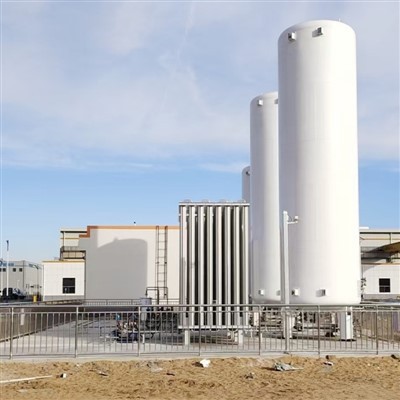
If you’re currently using cryogenic pressure vessels, or you’re thinking of upgrading your storage system, safety shouldn’t be an afterthought—it should be the foundation of your purchase. Every step we take when building our vessels, from design to installation, is focused on reducing fire risk, but that only works if you apply those steps to your site and your team. If you want to talk more about how to update your safety protocols, or how our vessels can support your facility’s safety goals, we’re here to connect. We’ve worked with hundreds of facilities across industries, and we can help you tailor a plan that fits your space, materials, and budget.
LNG Fueling Station References
National Fire Protection Association (NFPA) 55: Standard for the Storage, Handling, and Use of Cryogenic Fluids. 2022.
Occupational Safety and Health Administration (OSHA) 29 CFR 1910.106: Flammable and Combustible Liquids. 2023.
American Society of Mechanical Engineers (ASME) Boiler and Pressure Vessel Code, Section VIII: Rules for Construction of Pressure Vessels. 2021.
Cryogenic Society of America (CSA) Safety Guidelines for Cryogenic Systems. 2020.
Tianjin Baiyan Technology Co., Ltd.
With abundant experience, we are one of the most professional cryogenic pressure vessel manufacturers and suppliers in China. We warmly welcome you to buy customized cryogenic pressure vessel made in China here from our factory. If you have any enquiry about pricelist and quotation, please feel free to email us.
Address: No. 36, Jixian Road, Shuangqiaohe Development Zone, Jinnan District, Tianjin, China
E-mail: sales@tjbaiyan.com
WebSite: https://www.baiyan-tech.com/
