Can Anionic Polyacrylamide be used in the papermaking industry? Anionic Polyacrylamide
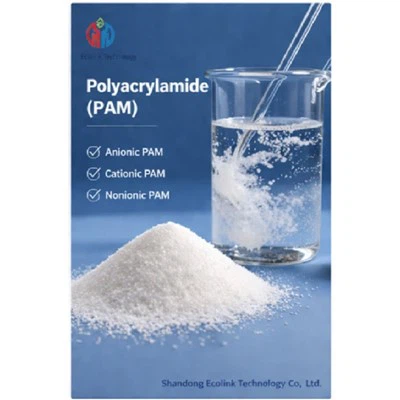
As a supplier of anionic polyacrylamide, I often get asked about its applications in various industries, and one question that comes up quite frequently is whether it can be used in the papermaking industry. In this blog, I’ll delve into the details of how anionic polyacrylamide plays a significant role in the papermaking process.
Understanding Anionic Polyacrylamide
Anionic polyacrylamide (APAM) is a water – soluble polymer with a high molecular weight. It is made up of acrylamide monomers that have been copolymerized with anionic monomers. These anionic groups give the polymer a negative charge, which is key to its many functions in different industrial processes.
The Role of Anionic Polyacrylamide in Papermaking
Retention Agent
In the papermaking process, one of the primary goals is to retain as much of the fine fibers, fillers, and other additives as possible in the paper sheet. Anionic polyacrylamide serves as an excellent retention agent. When added to the pulp suspension, its negatively charged chains can interact with the positively charged fibers and fillers in the pulp. Through a process called flocculation, the APAM causes the fine particles to clump together. This flocculation or agglomeration of the pulp components allows them to be more effectively trapped on the paper machine’s wire mesh during the paper – forming process.
For example, in a typical newsprint production, where a large amount of fillers like calcium carbonate is used, APAM can significantly improve the retention of these fillers. This not only reduces the loss of expensive raw materials but also helps in achieving a more uniform distribution of fillers in the paper, which in turn improves the paper’s printability, opacity, and smoothness.
Drainage Aid
Another crucial function of anionic polyacrylamide in papermaking is as a drainage aid. Efficient water removal from the pulp slurry is essential for the speed and quality of paper production. APAM promotes water drainage by helping to form a more porous and open structure in the wet paper web.
The flocs formed by APAM allow water to flow more freely through the paper web during the dewatering stage. This leads to a shorter residence time on the wire section of the paper machine, enabling higher production speeds. In high – speed paper machines, where the time available for water removal is extremely limited, the use of APAM as a drainage aid can be a game – changer. It can increase the machine’s productivity by reducing the energy and time required for drying the paper.
Strength Enhancer
Anionic polyacrylamide can also enhance the physical strength of paper. When it is added to the pulp, it can form bridges between the fibers, increasing the bonding between them. This results in improved tensile strength, burst strength, and tear strength of the paper.
For instance, in the production of packaging papers such as corrugating medium and linerboard, where strength properties are of utmost importance, APAM can be used to reinforce the paper structure. By enhancing the fiber – to – fiber bonding, the paper can better withstand the stresses during storage, transportation, and handling of the packaged goods.
Application Methods in Papermaking
The application of anionic polyacrylamide in the papermaking industry is typically done in a dilute solution. The APAM solution is added to the pulp at specific points in the papermaking process, depending on the desired effect.
For retention and drainage, it is commonly added to the headbox or the fan pump discharge. This allows for good mixing with the pulp and ensures that the polymer can act on the fine particles and fibers as soon as possible. When used as a strength enhancer, it may be added earlier in the pulp preparation process to ensure more thorough interaction with the fibers.
The dosage of APAM also needs to be carefully controlled. Too little APAM may not achieve the desired effects, while too much can lead to excessive flocculation, which may cause problems such as uneven paper formation, deposits on the paper machine, and reduced paper quality. Therefore, it is essential for papermakers to work closely with suppliers like me to determine the optimal dosage based on factors such as pulp type, machine conditions, and the desired paper properties.
Benefits of Using Anionic Polyacrylamide in Papermaking
Cost – effectiveness
As mentioned earlier, by improving retention, APAM helps to reduce the loss of costly fillers and fibers. This directly translates into cost savings for papermaking companies. Additionally, the improved drainage and drying efficiency due to APAM reduce energy consumption, further lowering production costs.
Quality Improvement
The use of APAM leads to better paper quality in terms of physical properties, appearance, and printability. Papers with enhanced strength are more reliable for packaging applications, while improved printability is crucial for papers used in publishing and advertising. The more uniform distribution of fillers and fibers also results in a smoother and more consistent paper surface.
Environmental Sustainability
With better retention of materials, there is less pollution in the paper mill’s effluent. The reduction of waste materials in the wastewater not only benefits the environment but also reduces the cost of wastewater treatment for the mill. Additionally, the improved energy efficiency helps to reduce the overall carbon footprint of the papermaking process.
Challenges and Considerations
Although anionic polyacrylamide offers many benefits in papermaking, there are also some challenges that need to be addressed. One of the main challenges is the compatibility of APAM with other chemicals used in the papermaking process. For example, some papermaking additives may have different charges or chemical properties that can interact with APAM, potentially affecting its performance.
Another consideration is the storage and handling of APAM. Since it is a polymer, it needs to be stored under appropriate conditions to maintain its stability and effectiveness. Exposure to high temperatures, sunlight, or certain chemicals can degrade the polymer and reduce its performance.
Conclusion
In conclusion, anionic polyacrylamide can and should be used in the papermaking industry. Its multiple functions as a retention agent, drainage aid, and strength enhancer make it an invaluable additive in modern papermaking processes. It offers significant cost – savings, quality improvements, and environmental benefits.
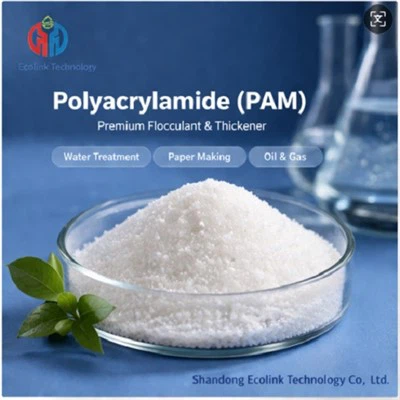
If you are involved in the papermaking industry and are looking for a reliable anionic polyacrylamide supplier, I invite you to reach out for a discussion. We can work together to determine the most suitable product and dosage for your specific papermaking needs. Whether you are producing high – quality printing papers or heavy – duty packaging materials, our anionic polyacrylamide can help you achieve better results. Contact us today to start a conversation about how we can enhance your papermaking operations.
Water Treatment Equipment References
- "Handbook of Pulp and Paper Technology", various authors, multiple editions
- "Papermaking Chemistry", by Dr. Norman A. Neill, published by TAPPI Press
- Research papers on papermaking additives and their applications in industry – leading journals such as "Pulp & Paper Canada" and "TAPPI Journal"
Shandong Ecolink Technology Co., Ltd.
Shandong Ecolink Technology Co., Ltd. is one of the most reliable anionic polyacrylamide manufacturers and suppliers in China. We warmly welcome you to wholesale bulk high quality anionic polyacrylamide from our factory. If you have any enquiry about cooperation, please feel free to email us.
Address: No. 8, Xiaying Chemical Industry Park, Aobu Road, Xiaying Town, Changyi City, Weifang City, Shandong Province,China
E-mail: sale02@ecolink-environment.com
WebSite: https://www.ecolink-environment.com/
