Are there any international standards for hex long nuts? That’s a question I often get asked as a supplier of hex long nuts. I’ve been in this business for quite a while, and I know how important it is for buyers to understand the standards behind the products they’re purchasing. So, let’s dive right in and explore this topic. Hex Long Nut
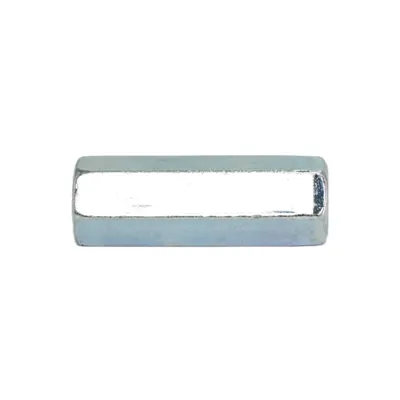
What are Hex Long Nuts?
First off, let me quickly explain what hex long nuts are. They’re basically nuts with a hexagonal shape, just like regular nuts, but they’re longer. This extra length gives them some unique advantages. For example, they can provide a greater thread engagement, which means they hold things together more securely. They’re commonly used in applications where a stronger connection is needed, like in heavy machinery, automotive parts, and construction projects.
International Standards – Do They Exist?
The short answer is yes, there are international standards for hex long nuts. These standards are put in place to ensure that the nuts are of a certain quality and meet specific requirements. One of the most well – known international standards organizations is the International Organization for Standardization (ISO).
ISO has a set of standards for fasteners, including hex long nuts. The ISO standards cover things like dimensions, mechanical properties, and surface finish. For example, ISO 4033 specifies the dimensions for hex long nuts. It states the size of the nut, such as the diameter of the thread, the height of the nut, and the width across the flats. This is crucial because it allows manufacturers and buyers from different countries to have a common understanding of what the product should look like.
Another important standard is related to the mechanical properties. ISO 898 defines the strength classes for fasteners. For hex long nuts, this means that they are classified according to their ability to withstand certain loads. For instance, a nut with a higher strength class can handle more force without breaking or deforming.
But ISO isn’t the only game in town. There are also other regional and national standards. In the United States, the American National Standards Institute (ANSI) has its own set of standards for fasteners. ANSI B18.2.2 covers hex nuts, including long ones. These standards are similar to the ISO standards in many ways, but there can be some differences in dimensions and tolerances.
In Europe, the European Committee for Standardization (CEN) has standards that are widely used. CEN standards are often harmonized with ISO standards to make trade within the European Union easier.
Why are these Standards Important?
These international standards are super important for a few reasons. First of all, they ensure quality. When a hex long nut meets a certain standard, you know that it has been manufactured to a specific level of quality. This means that it’s less likely to fail in use, which is crucial in applications where safety is a concern.
Secondly, standards make it easier for buyers and suppliers to communicate. If a buyer in one country asks for a hex long nut that meets ISO 4033, the supplier in another country knows exactly what the buyer wants. This reduces misunderstandings and makes the purchasing process smoother.
Thirdly, standards promote fair competition. Since all manufacturers are required to meet the same standards, it levels the playing field. No one can cut corners by producing sub – standard products and undercutting the competition.
Challenges with International Standards
However, it’s not all rosy. There are some challenges when it comes to international standards. One of the biggest challenges is the differences between regional and national standards. As I mentioned earlier, ANSI and ISO standards can have some differences. This can be confusing for buyers and suppliers, especially when they’re dealing with international trade.
Another challenge is keeping up with the changes in standards. Standards are constantly being updated to reflect new technologies and better manufacturing practices. As a supplier, I have to make sure that my products always meet the latest standards. This means investing in new equipment and training my staff regularly.
How I Ensure My Hex Long Nuts Meet Standards
As a supplier, I take the standards very seriously. I have a quality control team that checks every batch of hex long nuts I produce. They measure the dimensions to make sure they meet the relevant ISO or ANSI standards. They also test the mechanical properties to ensure that the nuts have the right strength class.
I also work closely with my raw material suppliers. I make sure that the steel or other materials I use to make the nuts are of high quality and meet the standards for fasteners. This is important because the quality of the raw material has a big impact on the final product.
Conclusion and Call to Action

So, to sum it up, there are definitely international standards for hex long nuts. These standards play a crucial role in ensuring quality, facilitating communication, and promoting fair competition. However, there are also some challenges that come with these standards.
Stainless Rods If you’re in the market for hex long nuts, you can be confident that my products meet the highest international standards. Whether you need nuts for a small DIY project or a large industrial application, I’ve got you covered. I’m always happy to discuss your specific requirements and provide you with a quote. So, if you’re interested in purchasing hex long nuts, don’t hesitate to reach out. Let’s start a conversation and see how I can help you with your project.
References
- International Organization for Standardization (ISO). ISO 4033.
- International Organization for Standardization (ISO). ISO 898.
- American National Standards Institute (ANSI). ANSI B18.2.2.
- European Committee for Standardization (CEN). Relevant CEN standards for fasteners.
Jiaxing Jinling Hardware Technolgy Joint Stock Co., Ltd.
As one of the most experienced hex long nut manufacturers and suppliers in China, we also support customized service. Please feel free to buy bulk high-grade hex long nut made in China here from our factory. For quotation and price list, contact us now.
Address: No.32, Shenjiadai, Xuyouche Village, Qinshan Subdistrict, Haiyan County, Zhejiang Province, China
E-mail: jlzxl@jinlingfstn.com
WebSite: https://www.china-nut-factory.com/
