Rock Climbing Exercises
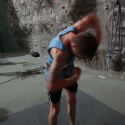
Warming up and cooling down exercises for climbing
I know that warming up and cooling down are important to my continued climbing ability, and yet I don’t always do it and I rarely see other people at the climbing wall or on the crag doing it.
I hold a Bachelor of Education degree in Physical Education, have taught it for many years, including GCSE and for those activities I have always warmed up and cooled down, and encourage everyone under my instruction to do so, and yet climbing doesn’t seem to generate a warming up culture. Outdoor climbers think the walk to the crag is enough and indoor climbers tend to start on easy routes, but even this often isn’t the case.
So why do we need to warm up before rock climbing?
When we climb we are asking the body to do far more than usual, lifting our own body repeatedly up a wall, often in contorted positions is pretty demanding, and we need to prepare it for this increase in strain on the heart and lungs, and the muscular and skeletal systems. It doesn’t have to take long, so won’t impede on your climbing time and will definitely improve your climbing session and your climbing in general and of course you will be less prone to injury.
Warming up allows blood to flow quicker increasing the oxygen flow to the muscles, preparing the body for the activity to follow. Production of synovial fluid is increased reducing the friction between the joints. Muscles are more elastic; reaction time is increased as well as mental agility.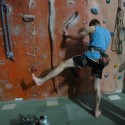
Raising your heart rate is your first priority, outdoors you can make your approach walk more vigorous, or once you’ve dumped your rucksack, have a bit of a run, and indoors running on the spot, astride jumps, skipping etc will increase your heart and breathing rate. You know you are warming up correctly when you start to get out of breath. This in turn increases your body temperature which then enables you to stretch dynamically.
- Static stretching was always encouraged as part of the warm up but unless the muscles are at the right temperature static stretching has no benefit and may even have a negative effect of shortening rather than lengthening the muscles and could result in injury.
- Dynamic stretching involves vigorous repetitive movements that mimic the type of movements you will be doing once you climb; reaching the arms upwards and outwards, swinging the arms forwards and backward, the chest expander etc.
You will find as you repeat these exercises your range of movement is extended with each repetition.
Click on each thumbnail for full picture and description.


Click on each thumbnail for full picture and description.
For the legs, lifting the knees high as you run on the spot, and kicking the heels to the bottom ( not a move you would particularly do climbing but you need to stretch the muscles that work in antagonistic pairs – as one muscle contracts/ shortens the other lengthens/relaxes – in this case the Quadriceps and the Hamstrings),
Lifting the knees out to the side, whilst running on the spot, leg swings forwards and backwards and side to side, which not only stretches the muscles but helps to mobilise the joints.
By working from the ankles upward each joint can be loosened by rotating at least 5 times in both directions.
The shoulders need particular attention, as this has the greatest range of movement and although this joint is referred to as a ball and socket joint, it is actually only a shallow rotator cuff, and relies on tendons and ligaments for stability.
Finally choose a gentle route to start on, depending on the grade you climb, and progress through the grades.
If you are climbing outdoors and continue to climb during the winter, you may need longer to warm up and may need to warm up again after belaying or resting between routes.
Cooling down at the end of your climbing session is just as important.
Finish with an easy climb to aid recovery by removing carbon dioxide and lactic acid that cause the muscles to stiffen after vigorous exercise, and by slowly reducing the heart and respiratory rate. Suddenly stopping and packing up can lead to venal pooling in the skeletal muscles, which can lead to a rapid lowering in blood pressure making you feel light headed and dizzy.
Static stretching at this point is very beneficial as the muscles are at their most elastic. Begin at the top and work downwards, ensuring you work all the muscles, including the antagonistic pairs
- Deltoids/ Latissimus Dorsi
- Biceps/Triceps
- Gluteals/ Sartorius
- Quadriceps/Hamstrings.

Each stretch must be held for 20 seconds.
Good luck and happy climbing!
Warming up and cooling down
I know that warming up and cooling down are important to my continued climbing ability, and yet I don’t always do it and I rarely see other people at the climbing wall or on the crag doing it. I hold a Bachelor of Education degree in Physical Education, have taught it for many years, including GCSE and for those activities I have always warmed up and cooled down, and encourage everyone under my instruction to do so, and yet climbing doesn’t seem to generate a warming up culture. Outdoor climbers think the walk to the crag is enough and indoor climbers tend to start on easy routes, but even this often isn’t the case. So why do we need to warm up? When we climb we are asking the body to do far more than usual, lifting our own body repeatedly up a wall, often in contorted positions is pretty demanding, and we need to prepare it for this increase in strain on the heart and lungs, and the muscular and skeletal systems. It doesn’t have to take long, so won’t impede on your climbing time and will definitely improve your climbing session and your climbing in general and of course you will be less prone to injury. Warming up allows blood to flow quicker increasing the oxygen flow to the muscles, preparing the body for the activity to follow. Production of synovial fluid is increased reducing the friction between the joints. Muscles are more elastic; reaction time is increased as well as mental agility.
Raising your heart rate is your first priority, outdoors you can make your approach walk more vigorous, or once you’ve dumped your rucksack, have a bit of a run, and indoors running on the spot, astride jumps, skipping etc will increase your heart and breathing rate. You know you are warming up correctly when you start to get out of breath. This in turn increases your body temperature which then enables you to stretch dynamically. Static stretching was always encouraged as part of the warm up but unless the muscles are at the right temperature static stretching has no benefit and may even have a negative effect of shortening rather than lengthening the muscles and could result in injury. Dynamic stretching involves vigorous repetitive movements that mimic the type of movements you will be doing once you climb; reaching the arms upwards and outwards, swinging the arms forwards and backward, the chest expander etc. You will find as you repeat these exercises your range of movement is extended with each repetition. For the legs, lifting the knees high as you run on the spot, and kicking the heels to the bottom ( not a move you would particularly do climbing but you need to stretch the muscles that work in antagonistic pairs – as one muscle contracts/ shortens the other lengthens/relaxes – in this case the Quadriceps and the Hamstrings), lifting the knees out to the side, whilst running on the spot, leg swings forwards and backwards and side to side, which not only stretches the muscles but helps to mobilise the joints. By working from the ankles upward each joint can be loosened by rotating at least 5 times in both directions. The shoulders need particular attention, as this has the greatest range of movement and although this joint is referred to as a ball and socket joint, it is actually only a shallow rotator cuff, and relies on tendons and ligaments for stability.
Finally choose a gentle route to start on, depending on the grade you climb, and progress through the grades.
If you are climbing outdoors and continue to climb during the winter, you may need longer to warm up and may need to warm up again after belaying or resting between routes.
Cooling down at the end of your climbing session is just as important. Finish with an easy climb to aid recovery by removing carbon dioxide and lactic acid that cause the muscles to stiffen after vigorous exercise, and by slowly reducing the heart and respiratory rate. Suddenly stopping and packing up can lead to venal pooling in the skeletal muscles, which can lead to a rapid lowering in blood pressure making you feel light headed and dizzy. Static stretching at this point is very beneficial as the muscles are at their most elastic. Begin at the top and work downwards, ensuring you work all the muscles, including the antagonistic pairs – Deltoids/ Latissimus Dorsi, Biceps/Triceps, Gluteals/ Sartorius, Quadriceps/Hamstrings. Each stretch must be held for 20 seconds. Good luck and happy climbing!
Filed under Blog by